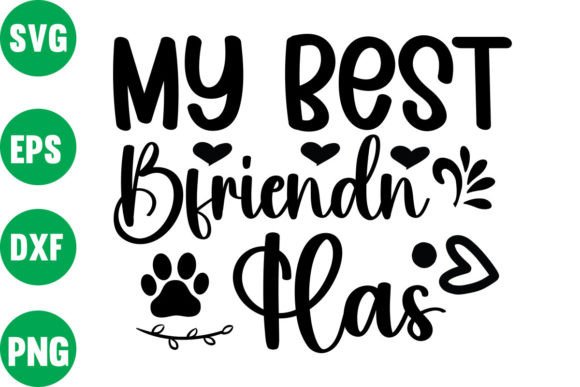
Reviewing the MY BEST BFRIENDN HAS Design for Embroidery
As a designer who spends half my life staring at stitch previews and the other half wrestling with hoop tension, I have learned to look past the glossy marketing thumbnails. When a new file lands on my desktop, I do not just see a pretty picture. I see potential puckering, thread breaks, and customer questions. Recently, I pulled up the MY BEST BFRIENDN HAS design to evaluate its viability for real-world production. This is not just a graphic; it is a statement piece that demands careful handling if you want your finished product to look professional rather than homemade in the wrong way.
The first impression of this design is one of playful affection. The typography suggests a casual, hand-drawn aesthetic that resonates deeply with current trends in personalized gifts. However, as an embroidery specialist, my immediate concern is always translation. How does a vector path meant for vinyl cutting or printing translate into thousands of needle penetrations? The mood is lighthearted, perfect for friendship bracelets, matching bestie apparel, or sentimental keepsakes. But the visual personality relies heavily on clean lines and spacing, which can be treacherous in machine embroidery if not managed correctly.
Real-World Application: The Custom Tote Bag Test
To truly understand the value of this asset, I imagined a specific scenario: a local boutique owner wants to launch a line of canvas tote bags for a "Galentine’s Day" promotion. She needs something quick to stitch but impactful enough to justify a premium price point. The MY BEST BFRIENDN HAS design fits this brief theoretically, but practically, it requires strategic placement.
If you are stitching this onto a heavy cotton canvas, the fabric texture will fight against fine details. Canvas has a coarse weave. If the lettering in the design is too thin, the needle will simply push the fibers aside rather than covering them, resulting in a ghostly, incomplete look. For a project like this, I would recommend using a dense fill stitch or a tight satin stitch border to ensure the text pops against the rough background. The design’s layout must be scaled appropriately. Too small, and it becomes illegible clutter; too large, and it distorts the bag’s structure due to excessive pull compensation.
Navigating Fabric and Hoop Constraints
One of the most critical aspects of using any digital embroidery file is understanding where it fails. This design, likely originating as an SVG for cutting machines like Cricut or Silhouette, was not inherently built for the physics of thread. When adapting such graphics for embroidery, you must be vigilant about hoop size and stabilizer choice.
- Small Hoop Sizes: If you are working with a 4x4 inch hoop, you may need to crop or simplify the design. Crowding the edges leads to hoop burn and skipped stitches.
- Stretchy Fabrics: Using this on a sweatshirt or baby onesie requires a cut-away stabilizer. Knits stretch, and if the stitch density is too high without proper support, the fabric will pucker permanently around the letters.
- Dark Fabrics: Contrast is king. If you are stitching white thread on a black hoodie, ensure the design does not have tiny, isolated elements that might get lost or require excessive underlay stitching to cover the base fabric.
I often advise clients to test the design on scrap fabric first. Never trust the screen preview alone. Stitch it out on the actual material you intend to sell. Check the thread color contrast vigorously. A design that looks crisp in black and white mockups might vanish in low-contrast thread combinations like navy on black or cream on white.
Commercial Viability for Etsy Sellers and Crafters
For the Etsy seller or small shop owner, time is money. The appeal of the MY BEST BFRIENDN HAS design lies in its emotional resonance. It sells itself because it taps into the universal desire for connection. However, from a business perspective, you must consider the perceived value. A poorly stitched design devalues the entire garment. Customers equate neatness with quality. If the corners of the letters are jagged or the fill stitches are gappy, they will assume the entire product is cheap.
This graphic belongs in the category of high-engagement items. It works exceptionally well for:
- Custom Apparel: Matching shirts for bridal parties or friend groups.
- Home Decor: Pillow covers or kitchen towels where the flat surface allows for precise stitching.
- Personalized Gifts: Baby items or nursery decor, provided the scale is adjusted for smaller garments.
When listing these items, use terms like handmade product and personalized gift to attract the right buyers. But remember, your listing photos must reflect the reality of the stitch. Use printable mockups wisely, but always include at least one photo of the actual embroidered item to build trust. Buyer engagement increases when they can see the texture and dimension of the thread.
Technical Notes for the Serious Designer
Before you commit to a production run, there are technical hurdles to clear. Since the source is described as an SVG for cutting machines, you are likely digitizing this yourself or using an auto-digitize feature. Auto-digitizing is rarely sufficient for professional results. You must manually adjust the stitch types.
Consider using a running stitch for internal details to reduce bulk, and reserve satin stitches for borders to create sharp, defined edges. Pay close attention to stitch density. High density on thin fabric will cause tearing. Low density on thick fabric will look sparse. There is no one-size-fits-all setting. You must inspect small details closely. Are there tiny dots or serifs that will not hold up? If so, remove them. Simplify the design for the medium.
Furthermore, confirm licensing before selling. Just because you bought a digital file does not always mean you have commercial rights for physical goods. Check the terms provided by the creator. If the license is unclear, reach out. Protecting your craft business from intellectual property issues is as important as protecting your machine from needle breaks.
Final Verdict on Design Utility
The MY BEST BFRIENDN HAS design is a strong contender for seasonal collections and friendship-themed merchandise. Its strength is its emotional clarity and versatile layout. However, its success depends entirely on the executor’s skill in translating a 2D graphic into a 3D textile art form. It is not a plug-and-play solution for beginners who ignore fabric properties. For the experienced embroiderer who understands stabilizer, tension, and stitch manipulation, it is a valuable asset. It offers a balance of whimsy and structure that, when executed with precision, elevates a simple t-shirt or tote into a cherished keepsake. Treat it with respect, test it thoroughly, and it will serve your brand well.